

Newsletter 6 | October 6, 2025 Edition Out Now
Latest research
Decarbonising Without Starving: MCST Warns of Food-Security Risks in Pacific Shipping Transition
A new study by the Micronesian Center for Sustainable Transport (MCST) warns that Pacific Island nations could face rising food insecurity if global shipping decarbonization policies raise freight costs without safeguards. The report, Balancing Climate Action and Food Security: The Pacific’s Call for an Equitable IMO Transition, highlights that while carbon pricing is essential for achieving net-zero goals, poorly designed measures could disproportionately affect small island economies that rely on imported goods. It urges the International Maritime Organization (IMO) to pair strong climate ambition with equitable compensation mechanisms to prevent new forms of economic hardship.
Read the full report here.

Image: Joseph Hing
Opinion: “Shelve the IMO net-zero plan … without punishing small islands”
TradeWinds recently published a critique from Erick Dawicki, head of the Dominica Maritime Registry, arguing that the IMO’s current approach risks harming small island states and developing nations. Dawicki argues that without clear measures for equitable revenue sharing, cost mitigation, and technology access, new carbon levies risk raising freight costs for those least responsible for global emissions.
Read the full opinion piece here.

Image: Pexels.com
Perspective
Pacific Island States and the Extraordinary MEPC: A Pivotal Moment for Equitable Transition
As the IMO convenes its Extraordinary MEPC session this October, Pacific Island states carry more than high ambition. They carry urgency. In Charting the Course: Pacific Island States and the Extraordinary MEPC, MCST cautions that this isn’t just another policy meeting. It’s a crossroads: whether decarbonization frameworks adopt fairness, transparency, and access for the most vulnerable. The region is demanding clarity on revenue distribution, fund governance, and access pathways to ensure that future fleets, fuel systems, and funds don’t bypass those with the least leverage.
In short: the Pacific isn’t asking for favors. It’s asking for accountability and equity as the world’s shipping systems evolve.

News spotlight
World Maritime Day 2025: Pacific Voices at the Helm
This year’s World Maritime Day (25 September) carried special weight for the Pacific. Across the region, nations marked the day by reaffirming a shared message: climate action on the seas must lift every canoe, not just the biggest ships.
For MCST, the occasion underscored ongoing efforts to support 6PAC+ countries shaping the IMO’s Net-Zero Framework, champion a Net-Zero Fund that delivers real benefits for Small Island Developing States (SIDS) and Least Developed Countries (LDCs), and advance truly zero or near-zero fuel solutions grounded in science and equity.
It was also a moment to celebrate the people who keep the Blue Pacific moving—seafarers, port workers, policymakers, researchers, and communities—whose work sustains both trade and climate ambition.
As the world turns toward October’s IMO meetings in London, the Pacific’s call remains the same: progress at sea must be fair, inclusive, and built on partnership.
Learn more about World Maritime Day.
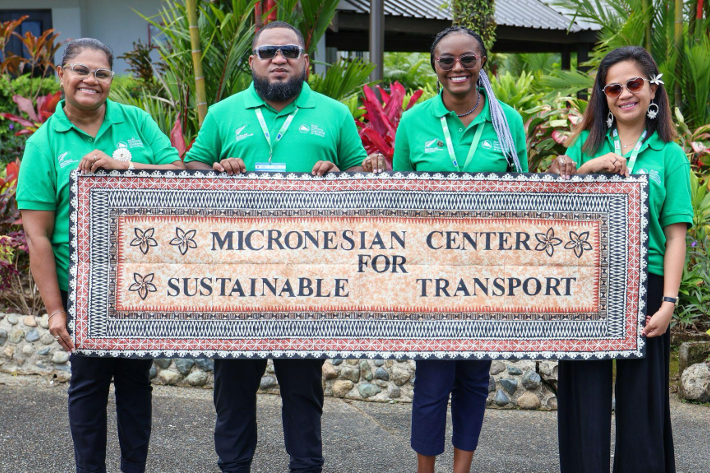
Image: Joseph Hing
IMO Supports Pacific One-Maritime Framework To Strengthen Regional Maritime Cooperation
IMO is supporting Pacific Island countries and territories (PICTs) in advancing the Pacific One-Maritime Framework (POMF), a regional initiative designed to align maritime safety, security, capacity-building and equitable access to shipping across the Pacific region.
The Framework and its draft Implementation Plan was the focus of the 4th POMF Steering Committee Meeting (20-22 September) and the 4th Heads of Maritime Meeting (23 September), organized by the Pacific Community (SPC) in Fiji.
Read more here.

Image: MCST
Vanuatu Leads Push to Curb Fossil-Fuel Influence at the UN
Vanuatu is spearheading efforts to turn the International Court of Justice’s landmark climate ruling into a binding UN resolution that holds states—and the fossil-fuel industry—accountable for climate harm. Climate Minister Ralph Regenvanu says the move aims to build pressure “outside COP” and protect vulnerable nations from the political power of fossil-fuel interests.
Read the full story here.

Ralph Regenvanu, Vanuatu’s climate change minister. Image: John Thys/AFP/Getty Images
Inspiration
“Ko au ko e tahi, ko e tahi ko au” — “I am the sea, and the sea is me.” (Niuean proverb)
This simple truth captures the bond between the Pacific people and the ocean. It reminds us why this work matters: protecting the sea is not just environmental duty; it’s cultural survival, identity, and future.
Image: Pixabay
Share:


